Ethics-Aware Automation in Scalable Cloud-Native Health Architectures

Cloud-native computing and automation are transforming healthcare systems by enabling scalable, resilient, and efficient delivery of digital health services. As hospitals, clinics, and health platforms increasingly adopt cloud-based infrastructures and automated workflows, ethical considerations become crucial. Ethics-aware automation integrates ethical principles into the design, deployment, and operations of automated systems to ensure fairness, privacy, transparency, and accountability — especially in health contexts where human lives and sensitive data are involved.
This research explores how ethics-driven automation can be embedded in scalable cloud-native health architectures, the challenges involved, and best practices for implementation.
1. Background: Cloud-Native Health Architectures
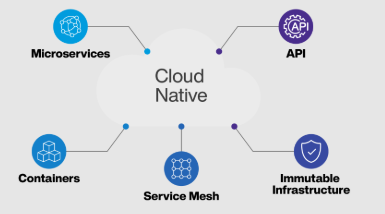
Cloud-native architectures use microservices, containerization (e.g., Docker), orchestration (e.g., Kubernetes), and continuous delivery pipelines to build applications that scale elastically and operate resiliently. In healthcare, cloud-native systems support:
Electronic Health Records (EHRs)
Telemedicine platforms
Real-time monitoring via IoT devices
AI-assisted diagnostics
Automation in cloud-native environments often takes the form of:
CI/CD pipelines
Policy-driven scaling and self-healing
Automated compliance and security scanning
AI/ML workflow automation
These capabilities enhance performance and rapid delivery but introduce ethical risks when critical decisions or sensitive data are involved.
2. Ethical Dimensions of Automation in Healthcare
Healthcare delivery is inherently ethical, guided by principles such as beneficence (do good), non-maleficence (do no harm), autonomy, justice, and confidentiality. When automation and cloud scale intersect, additional ethical dimensions must be considered:
a. Data Privacy & Security
Patient data — including clinical history and real-time biometrics — is sensitive and highly regulated (e.g., HIPAA, GDPR). Automated data pipelines must enforce robust encryption, strict access controls, and policy-aware data lifecycle management to ensure confidentiality and consent.
b. Fairness & Bias
Automation increasingly uses AI/ML for diagnostics or resource allocation. If models are trained on biased datasets (e.g., underrepresenting demographic groups), automation can propagate unfair outcomes, such as misdiagnosis or unequal access.
c. Transparency & Explainability
Automated decisions — especially those involving AI — should be explainable to clinicians and patients. Black-box automation can erode trust and make accountability difficult in adverse outcomes.
d. Accountability & Governance
Cloud-native automation introduces complex dependency chains. Clear ownership, logs, and audit trails are essential so that decisions can be traced and accountability enforced when automation impacts patient care.
e. Consent & Autonomy
Patients must be informed and able to control how their data is used. Automated workflows that repurpose data for secondary analyses (e.g., research) require explicit consent mechanisms embedded within systems.
EQ.1. Ethical Risk Function for Automated Health Systems:

3. Ethical Risks in Cloud-Native Automation
Cloud-native health architectures pose unique risks:
1. Over-Automation of Critical Decisions
Fully automated decision points (e.g., triggering alarms or allocating scarce resources) without human oversight can lead to ethical violations, especially where nuance is required.
2. Elastic Scaling of Sensitive Workloads
Automated scaling can inadvertently increase attack surfaces or replicate data across regions with weaker protections, raising compliance concerns.
3. Inadequate Auditability
Short-lived containers and serverless functions can create challenges in capturing consistent logs and traceability, reducing visibility into decisions made by automation.
4. Model Drift & Unmonitored AI Performance
Automated ML pipelines that retrain models on new data without ethical monitoring risk degrading performance and amplifying bias over time.
4. Designing Ethics-Aware Automation
Embedding ethics into cloud-native health systems requires intentional design across the technology stack.
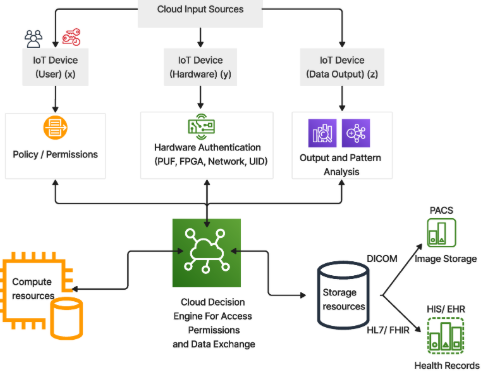
a. Policy-Driven Automation
Use formal ethics policies that are machine-readable and enforceable throughout CI/CD, orchestration, identity, and access management (IAM). Examples include:
Automated policy engines (e.g., Open Policy Agent) that enforce data governance rules at runtime.
Consent flags that guide what data can be processed and for which purposes.
b. Privacy-First Architectures
Adopt Privacy by Design principles:
End-to-end encryption (data at rest, in transit, in use when possible)
Differential privacy techniques for analytics
Tokenization or pseudonymization for secondary data uses
c. Ethical AI/ML Governance
Integrate ethics into AI workflows:
Bias and fairness testing as part of automated pipelines
Human review gates for model deployment
Explainability tools (e.g., SHAP, LIME) integrated into dashboards
d. Observability and Audit Trails
Cloud-native observability tools (e.g., Prometheus, ELK stacks) should capture:
Decision logs with context for automated alerts/actions
Role-based access and time-bound approvals
Immutable audit logs accessible for compliance checks
e. Human-in-the-Loop Controls
Even in automated systems:
Establish thresholds requiring human approval
Create override mechanisms for clinicians
Configure alerts for unusual patterns flagged by automation
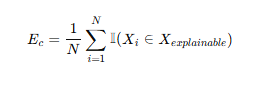
EQ.2. Explainability Confidence Score:
5. Operationalizing Ethics in Practice
Operationalizing ethics requires multi-disciplinary collaboration:
Governance Bodies and Ethical Review Boards
Health programs should establish governance bodies that review automation policies, monitor ethical metrics, and respond to incidents.
Training and Awareness
Developers, DevOps engineers, clinicians, and administrators must understand ethical standards relevant to cloud automation and healthcare delivery.
Regulatory Alignment
Systems must comply with legal frameworks such as HIPAA (US), GDPR (EU), and relevant local laws by embedding compliance checks into automated workflows.
Continuous Monitoring and Improvement
Implement feedback loops where ethical outcomes — such as false positives in automated alerts or disparities in AI predictions — are regularly assessed, and systems are adjusted accordingly.
Conclusion
Ethics-aware automation in scalable cloud-native health architectures is not optional; it is a foundational requirement to ensure trust, safety, and equitable care. By aligning ethical principles with automated design and operations, health systems can harness the benefits of cloud scalability while safeguarding patient rights and societal values. Successful implementation requires policy-driven automation, rigorous governance, human-in-the-loop controls, and continuous monitoring to adapt to evolving ethical challenges.
Comments
Join the discussionNo comments yet. Be the first to comment.


